


Based in Denmark, working anywhere

daniel.staflin@gmail.com

Less admin.
More
architecture.

Free consultation

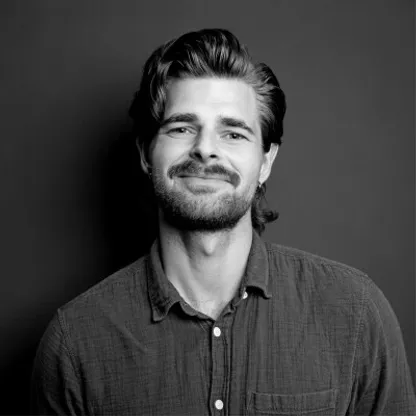
Daniel Staflin

Operations Architect. I help architecture and AEC practices build workflows that take the repetitive admin off their hands, so the team's time goes back into design.

Experience and training across

My perspective

The value has moved to vision, not production

AI has gotten good at the boring parts: the drafting, the data wrangling, the documentation. What it cannot do is the judgment, the taste, and the vision that made someone good at this work in the first place.

And that is exactly where teams run out of time, because the repetitive work takes up so much of the day. My job is to redraw that line, so the machine handles the routine and your people spend their hours on the work only they can do.

What I do

Three layers of an AI-ready practice

Each layer sits on the one below it. None is a paid upgrade of the last, and you can start wherever makes sense for your firm.

Foundations

Get your information in order

Before AI can help you, it has to be able to read how your firm actually works. That takes more than tidy folders. It means giving your projects, your standards, and the way you write a clear, well-structured home, one built so both your team and the AI can work from it. This is what keeps the answers grounded in your real projects and standards, so the AI works from what your firm has actually done instead of guessing at something that sounds right. This is the part that makes everything after it reliable, and it is where any real AI work has to start.

You own it, your team can run it without me, and it is made to last, not tied to any one product or the latest tool, so it keeps working as things change. And because your projects, meetings, and decisions all feed the same place, the setup keeps learning how your firm works, so the help it gives gets better with time instead of going stale. When confidentiality matters, it can run entirely on your own systems, so your project data and documents never leave your building, with nothing sensitive sitting on someone else’s servers.
Tools

Software your team actually uses

Once the foundation is there, I build the tools that carry the day-to-day. That might be a project management setup shaped around how you really run projects, or a simple client system you update just by typing, instead of clicking through forms. If there are tools you already like, I build around them rather than replacing them. And it can cover your public face too, refreshing or rebuilding your website so it looks like the practice you are and brings the right people in.

Automations

Repetitive paperwork, off your plate

This is the part that hands people their time back. I build automations for the document-heavy, repetitive work. A recorded design review or site meeting becomes clean notes, decisions, and a task list that lands straight in your tools. A helper cross-checks a project against the building regulations so nothing slips through. A first draft of project and competition texts gets written from your brief. And when you need it, specifications and work descriptions (arbejdsbeskrivelser).

It does not stop at the drawing board. The same approach can take the admin off your plate too, sorting new enquiries so the promising ones get a quick reply, following up on invoices that have gone unpaid, keeping clients and consultants posted with updates drafted for you, and answering client emails in your own voice. The newer helpers can even carry a whole job through several steps on their own, reading the meeting, drafting the update, lining up the follow-ups, and then waiting for a person to say go. Nothing leaves the office without you.

Wondering which layer your firm needs first?

Book a free intro call

How we could work

The whole path, or just the pieces you need

The easiest place to start is a short chat, and we take it from there. Every step below can also stand on its own.

  1. Audit

    A close look at how you actually work, where the time goes, and where automation would pay off.

  2. Blueprint

    A written plan: what to fix first, what to build, and the order that returns the most, soonest.

  3. Foundation

    A clear, well-structured home for your information, owned by your team and set up so AI can actually build on it.

  4. Build

    The specific tools and automations that remove your heaviest admin, one at a time, each proven on your own projects before we call it done.

  5. Train & hand over

    Your team learns to run and adjust everything, so the value sticks around after I leave.

My story

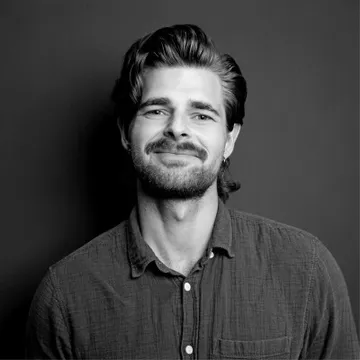
A bit about me

Email
daniel.staflin@gmail.com
Based in
Denmark, working anywhere

I trained as an architect at Aalborg University, and somewhere along the way I got just as interested in how the work comes together as in the buildings themselves. How a project actually gets organised, how the many moving parts and people end up pulling in the same direction. That curiosity has stuck with me ever since.

An exchange at UA, the University of Alicante, let me watch a whole production cycle up close. Then Stanford dropped me into a global, interdisciplinary team as lead architect, where I also picked up much of the project management, keeping the schedule, the many moving parts, and a team spread across time zones pulling in the same direction. That was where I first saw how much of the work really comes down to coordination, and my first real look at where AEC technology and AI were heading. We won the program's Sustainability Challenge, and one lesson stuck. Great design needs the coordination behind it to be just as good.

Then my internship at Henning Larsen showed me the same thing in practice, on big and genuinely complex projects. Most of the AI talk was about pretty images, while the work that shaped whether a project stayed on track sat somewhere far more ordinary, in the coordination, the documentation, and the admin. Almost nobody was working on that, so I did.

What drives me is simple. I want people spending less time on the repetitive stuff and more on the work they got into this field for. Part of my master’s thesis went into how new digital workflows and tools can move into a practice without getting in its way, and I have spent a lot of my own evenings there since, building workspaces that pull clean notes and next steps out of a recorded meeting, keep the constraints that matter in view as a design shifts, and take the admin off the people who should be doing the thinking.

Key skills

Architect by training, with a technical, engineering-minded grounding, and drawn to how a whole practice fits together. I work across design, technology, and process, and I try to keep people at the heart of it.

  • Architecture
  • Technology, AI & process implementation
  • Knowledge management
  • Workflow optimisation
  • Project management
  • Sustainable design
  • Interdisciplinary collaboration
  • Digital workflows

Credentials & training

Trained & certified

Beyond the degree, I've added certified courses in AI, project management, marketing, and operations. The short version of how I got here.

Notion Certified Administrator Certificate on its way
Certificate: Google AI Professional Certificate

Google AI Professional Certificate

Certificate: Google Project Management Professional Certificate

Google Project Management Professional Certificate

Certificate: Google Digital Marketing & E-commerce Professional Certificate

Google Digital Marketing & E-commerce Professional Certificate

Things I've built

See it for yourself

Here is the work itself, and one rule runs through all of it. The machine does the first, repetitive pass, and you keep the judgment, the design, and the final call. Nothing here runs on its own and ships itself. Some pieces are real, some are concepts, and every card says which. Click any card to see it up close.

FAQ

Everything you might be wondering

Not seeing your question? Let's talk →

Yes. When we work together, you work with me directly, and your project gets my full attention. It also means I take on very little at a time, on purpose.

Architecture and AEC practices. I'm based in Denmark and happy to work with firms wherever you are. If you design and deliver buildings and you are buried in admin, you are who I built this for. It fits especially well if you want to be genuinely ready for AI, set up in a way you own, rather than leaning on any single tool or model that could change under you.

Honestly, no. I set things up so your team keeps working the way it already does, just with less admin in the way. You never touch anything technical, and if it helps, I stay to teach, walking your team through how to work with what we built until everyone is comfortable.

It depends on the piece. A first foundation or a single automation would be a few weeks, not months, and we agree the scope up front so there are no surprises.

A short call, and an honest look at how you work today: how you handle documents, meetings, and project information. That is enough to see where the time is going.

Carefully, and it depends on what you need. If privacy is a priority, I can set things up to run entirely on your own systems, even the AI part, so sensitive data never leaves your office. That is an option we reach for when it fits, not a default.

No. I build things so they do not depend on any single product or the newest tool, which means they keep working as the technology moves on. You are not signing up for a rebuild every few months.

With a short, no-obligation call. If it feels like a fit, the natural first step is a small audit of how you work today, and from there we shape the scope and the price together, so you always know what you are saying yes to. Nothing is locked in from one chat.

Contact

Let's talk

If you run a practice and you are wondering where AI actually fits, without blowing up how you deliver, just tell me where your team's hours go. I read every message, and a first call costs you nothing.